Region
Kakheti
2,325 wines in the catalogue
Independent guide to Georgian wine
Estate
Own grapes, own winemaking and bottling — all confirmed by sources.
getwine's classification, not a legal or tax status · How we classify →
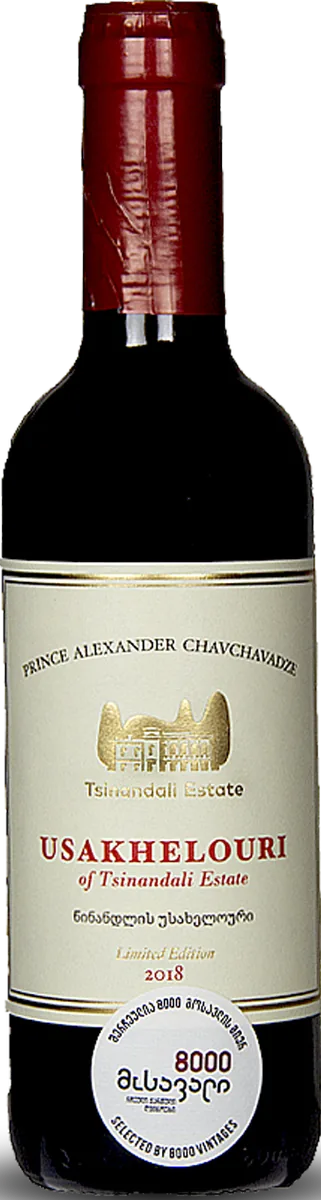
Kakheti · Semi-sweet
Only you can see your marks and ratings.
Region of Kakheti: a semi-sweet red wine from Usakhelouri. Sources note red berries on the nose. Produced by Tsinandali Estate.
What the bottle actually is.
Comparable values, collected the same way for every wine in the catalogue. Anything we do not know is left empty.
How to serve it, and what to expect in the glass.
Glass, temperature, food and occasion are catalogue suggestions, chosen mainly by the wine's colour, sweetness and tannin, not taken from reviews of it.
Glass
A medium tulip: sweetness reads without extra air, and a big bowl would only let the wine warm up.
How glass shapes differServing temperature
12–14 °C
Serve slightly chilled (12–14 °C); pairs with blue cheese, desserts, spicy dishes.
Aroma and taste
According to retailersAroma
Taste
Hue
Goes well with
When to open it
What it costs, where, and how that moved.
Offers on record
1 shop
23 November 2026
Price among similar wines
We compare prices of 0.75 L bottles only. This wine is sold in 375 ml, so it is not compared.
Shelf price over time · 375 ml
From 21 August 2026 to 23 November 2026. The series ends on the figure this page quotes.
About these figures
The median of the shops above is the price quoted everywhere on this page. Each price carries the date it was collected; shop names open the shop's own listing.
Who made it, and what they are.
Where the grapes were grown.
On the map
All regionsRegion
2,325 wines in the catalogue
Medals, with the competition and the year attached.
A medal on its own is decoration. Each one here carries the competition, the year and the weight of that competition.
No awards on record
We do not invent recognition. When a competition publishes results for this wine, they appear here with the year and the weight of the competition.
The season, vintage by vintage.
What the season was like in the Kakheti region compared with the previous decade.
warmer than the previous ten years here
a drier September than the previous ten
This wine has no appellation on record, so the weather is taken for the region and describes the wider area. Zones sharing this grid cell: 2. Their weather does not differ in this data — the grid is coarser than the zones. Weather explains what the season was like; it does not rate the wine or say when to open it.
How vintage weather is calculatedClose in style, not in price.
Matched on colour, sweetness, grape and region, and — where recorded — on tannin, aging vessel and technology. One wine per winery, none from this wine's own winery. Price plays no part, and no place is for sale.
Every claim on this page has a source.
Sources on this page
Glass, temperature, food and occasion are catalogue suggestions, chosen mainly by the wine's colour, sweetness and tannin, not taken from reviews of it.
Producers can respond
Tsinandali Estate can answer anything on this page. Responses are published next to the claim they answer.
If a figure here is wrong, the methodology page explains how we source, date and correct it.