Region
Kartli
267 wines in the catalogue
Independent guide to Georgian wine
Kartli · Dry
Only you can see your marks and ratings.
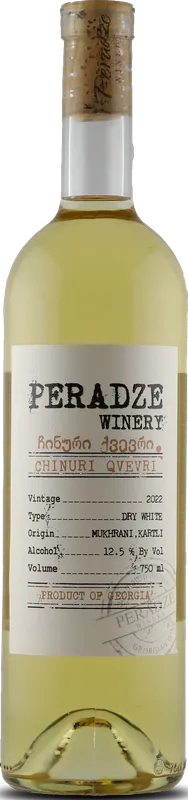
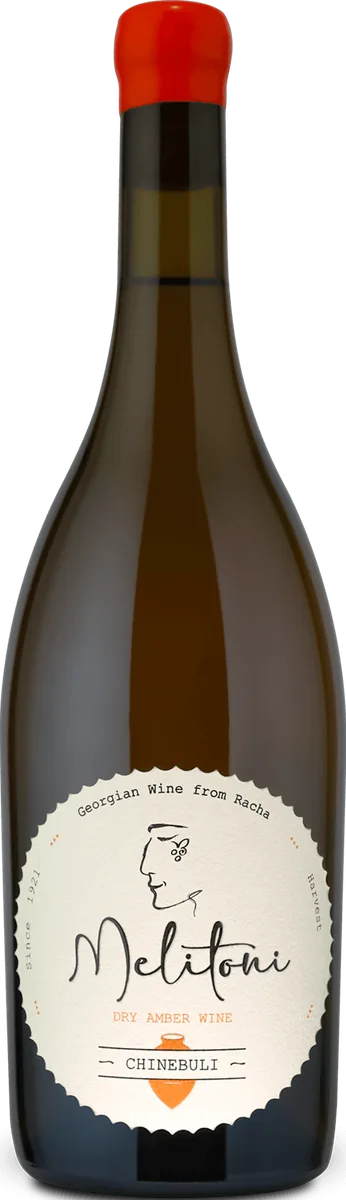
Region of Kartli: a dry amber wine from Chinuri. Made using the traditional qvevri method; alcohol 12.5%. Made at Melitoni (a winery with its own production).
What the bottle actually is.
Comparable values, collected the same way for every wine in the catalogue. Anything we do not know is left empty.
Grape varieties
How to serve it, and what to expect in the glass.
Glass
A wide bowl with high walls: skin-contact wine is tannic like a red and needs air, but is served cooler.
How glass shapes differServing temperature
12–14 °C
Amber wines behave like light reds: poultry, pork, hard cheese, walnut dishes.
Do not over-chill: below 10 °C tannins turn harsh.
Aroma and taste
Aroma
Taste
Hue
Goes well with
styleWhen to open it
Glass, temperature, food and occasion are derived from the wine's style by catalogue rules, not from reviews.
What it costs, where, and how that moved.
Offers on record
0 shops
No shop prices found yet
Shelf price over time
Not enough observations for a trend yet — the chart appears once prices have been collected for several weeks.
About these figures
The median of the shops above is the price quoted everywhere on this page. Each price carries the date it was collected; shop names open the shop's own listing.
Who made it, and what they are.
No production photography on file
Photos come from the winery's own site, with the source named under each image.
Winery
Category
Winery with own production
Where the grapes were grown.
On the map
All regionsRegion
267 wines in the catalogue
Medals, with the competition and the year attached.
A medal on its own is decoration. Each one here carries the competition, the year and the weight of that competition.
No awards on record
We do not invent recognition. When a competition publishes results for this wine, they appear here with the year and the weight of the competition.
The season, vintage by vintage.
What the season was like in the Kartli region compared with the previous decade.
Where these figures come from
Only the unusual is coloured: warmth and September rain are compared with this area's mean over the previous ten years; a frost means a minimum of −2 °C or lower after 10 April. An uncoloured indicator means “as usual”, a dashed one means no data. How the year went in other zones is behind the year link. ERA5-Land reanalysis, precipitation from ERA5 (Copernicus Climate Change Service), grid cell 42.000000 / 44.100000. The comparison is with this zone's own mean over the previous ten years: against the 1991–2020 climate normal almost every recent year in Kakheti would read as "warmer than usual", which says more about warming than about the season. This is a gridded model, not a weather station in the vineyard. Zones sharing this grid cell: 2. Their weather does not differ in this data — the grid is coarser than the zones.
This wine has no appellation on record, so the weather is taken for the region and describes the wider area.
Warmth and rain explain what the season was like; they do not replace tasting and do not tell you whether the wine is ready to drink.
Contains modified Copernicus Climate Change Service information 2026. Processed: daily values, elevation adjustment. Licence CC BY 4.0. How the weather is computed
Close in style, not in price.
Matched on colour, sweetness, grape and region, and — where recorded — on tannin, aging vessel and technology. One wine per winery, none from this wine's own winery. Price plays no part, and no place is for sale.
Every claim on this page has a source.
Sources on this page
Glassware, serving temperature, food and occasion are derived from the wine's style by catalogue rules. They are labelled as such wherever they appear.
Producers can respond
Melitoni can answer anything on this page. Responses are published next to the claim they answer.
If a figure here is wrong, the methodology page explains how we source, date and correct it.