Vintage years
The 1987 harvest
Season weather by region, compared with the previous ten years.
1987
season complete- Zones41
- Wines in catalogue1
In brief
The 1987 season in brief
- Kakheti: too few earlier years in the record to say what was usual; a spring frost down to −2 °C or lower after 10 April, when young shoots are at risk.
- Kartli: too few earlier years in the record to say what was usual; a spring frost down to −2 °C or lower after 10 April, when young shoots are at risk.
- Racha-Lechkhumi: too few earlier years in the record to say what was usual; a spring frost down to −2 °C or lower after 10 April, when young shoots are at risk.
- Imereti: too few earlier years in the record to say what was usual; a spring frost down to −2 °C or lower after 10 April, when young shoots are at risk.
- Samegrelo: too few earlier years in the record to say what was usual; a spring frost down to −2 °C or lower after 10 April, when young shoots are at risk.
- Abkhazia: too few earlier years in the record to say what was usual.
- Adjara: too few earlier years in the record to say what was usual; a spring frost down to −2 °C or lower after 10 April, when young shoots are at risk.
- Guria: too few earlier years in the record to say what was usual; a spring frost down to −2 °C or lower after 10 April, when young shoots are at risk.
- Samtskhe-Javakheti: too few earlier years in the record to say what was usual; a spring frost down to −2 °C or lower after 10 April, when young shoots are at risk.
Compared with each region's 1980–1986 mean. ERA5-Land and ERA5 reanalysis, Copernicus Climate Change Service (C3S), CC BY 4.0. Weather, not a rating of the wine.
Zone by zone
The 1987 season zone by zone
The season zone by zone: the region as a whole first, then its appellations. Each is compared with its own mean over the previous ten years.
Only the unusual is coloured: warmth and September rain are compared with each zone's mean over the previous ten years; a frost means a minimum of −2 °C or lower after 10 April. An uncoloured indicator means “as usual”, a dashed one means no data. Tap an indicator for the full sentence; the figures by region are in the table on the vintage years page.
Kakheti
The region is computed at a single representative point, not as an average of its appellations — so its indicators can differ from those of the appellations below.
Kakhetiwhole region
no data
too few earlier years in the record to say what was usual
no data
too few earlier years in the record to say what was usual
spring frost
a spring frost down to −2 °C or lower after 10 April, when young shoots are at risk
no data
too few earlier years in the record to say what was usual
no data
too few earlier years in the record to say what was usual
no frost
no spring frost down to −2 °C after 10 April
no data
too few earlier years in the record to say what was usual
no data
too few earlier years in the record to say what was usual
spring frost
a spring frost down to −2 °C or lower after 10 April, when young shoots are at risk
no data
too few earlier years in the record to say what was usual
no data
too few earlier years in the record to say what was usual
spring frost
a spring frost down to −2 °C or lower after 10 April, when young shoots are at risk
no data
too few earlier years in the record to say what was usual
no data
too few earlier years in the record to say what was usual
no frost
no spring frost down to −2 °C after 10 April
no data
too few earlier years in the record to say what was usual
no data
too few earlier years in the record to say what was usual
spring frost
a spring frost down to −2 °C or lower after 10 April, when young shoots are at risk
no data
too few earlier years in the record to say what was usual
no data
too few earlier years in the record to say what was usual
no frost
no spring frost down to −2 °C after 10 April
no data
too few earlier years in the record to say what was usual
no data
too few earlier years in the record to say what was usual
no frost
no spring frost down to −2 °C after 10 April
no data
too few earlier years in the record to say what was usual
no data
too few earlier years in the record to say what was usual
no frost
no spring frost down to −2 °C after 10 April
no data
too few earlier years in the record to say what was usual
no data
too few earlier years in the record to say what was usual
spring frost
a spring frost down to −2 °C or lower after 10 April, when young shoots are at risk
no data
too few earlier years in the record to say what was usual
no data
too few earlier years in the record to say what was usual
no frost
no spring frost down to −2 °C after 10 April
no data
too few earlier years in the record to say what was usual
no data
too few earlier years in the record to say what was usual
no frost
no spring frost down to −2 °C after 10 April
no data
too few earlier years in the record to say what was usual
no data
too few earlier years in the record to say what was usual
no frost
no spring frost down to −2 °C after 10 April
no data
too few earlier years in the record to say what was usual
no data
too few earlier years in the record to say what was usual
no frost
no spring frost down to −2 °C after 10 April
no data
too few earlier years in the record to say what was usual
no data
too few earlier years in the record to say what was usual
no frost
no spring frost down to −2 °C after 10 April
no data
too few earlier years in the record to say what was usual
no data
too few earlier years in the record to say what was usual
spring frost
a spring frost down to −2 °C or lower after 10 April, when young shoots are at risk
Kartli
The region is computed at a single representative point, not as an average of its appellations — so its indicators can differ from those of the appellations below.
Kartliwhole region
no data
too few earlier years in the record to say what was usual
no data
too few earlier years in the record to say what was usual
spring frost
a spring frost down to −2 °C or lower after 10 April, when young shoots are at risk
no data
too few earlier years in the record to say what was usual
no data
too few earlier years in the record to say what was usual
spring frost
a spring frost down to −2 °C or lower after 10 April, when young shoots are at risk
no data
too few earlier years in the record to say what was usual
no data
too few earlier years in the record to say what was usual
spring frost
a spring frost down to −2 °C or lower after 10 April, when young shoots are at risk
no data
too few earlier years in the record to say what was usual
no data
too few earlier years in the record to say what was usual
spring frost
a spring frost down to −2 °C or lower after 10 April, when young shoots are at risk
no data
too few earlier years in the record to say what was usual
no data
too few earlier years in the record to say what was usual
spring frost
a spring frost down to −2 °C or lower after 10 April, when young shoots are at risk
Racha-Lechkhumi
The region is computed at a single representative point, not as an average of its appellations — so its indicators can differ from those of the appellations below.
Racha-Lechkhumiwhole region
no data
too few earlier years in the record to say what was usual
no data
too few earlier years in the record to say what was usual
spring frost
a spring frost down to −2 °C or lower after 10 April, when young shoots are at risk
no data
too few earlier years in the record to say what was usual
no data
too few earlier years in the record to say what was usual
spring frost
a spring frost down to −2 °C or lower after 10 April, when young shoots are at risk
no data
too few earlier years in the record to say what was usual
no data
too few earlier years in the record to say what was usual
spring frost
a spring frost down to −2 °C or lower after 10 April, when young shoots are at risk
no data
too few earlier years in the record to say what was usual
no data
too few earlier years in the record to say what was usual
spring frost
a spring frost down to −2 °C or lower after 10 April, when young shoots are at risk
no data
too few earlier years in the record to say what was usual
no data
too few earlier years in the record to say what was usual
spring frost
a spring frost down to −2 °C or lower after 10 April, when young shoots are at risk
no data
too few earlier years in the record to say what was usual
no data
too few earlier years in the record to say what was usual
spring frost
a spring frost down to −2 °C or lower after 10 April, when young shoots are at risk
Imereti
The region is computed at a single representative point, not as an average of its appellations — so its indicators can differ from those of the appellations below.
Imeretiwhole region
no data
too few earlier years in the record to say what was usual
no data
too few earlier years in the record to say what was usual
spring frost
a spring frost down to −2 °C or lower after 10 April, when young shoots are at risk
no data
too few earlier years in the record to say what was usual
no data
too few earlier years in the record to say what was usual
spring frost
a spring frost down to −2 °C or lower after 10 April, when young shoots are at risk
no data
too few earlier years in the record to say what was usual
no data
too few earlier years in the record to say what was usual
spring frost
a spring frost down to −2 °C or lower after 10 April, when young shoots are at risk
Samegrelo
The region is computed at a single representative point, not as an average of its appellations — so its indicators can differ from those of the appellations below.
Samegrelowhole region
no data
too few earlier years in the record to say what was usual
no data
too few earlier years in the record to say what was usual
spring frost
a spring frost down to −2 °C or lower after 10 April, when young shoots are at risk
no data
too few earlier years in the record to say what was usual
no data
too few earlier years in the record to say what was usual
spring frost
a spring frost down to −2 °C or lower after 10 April, when young shoots are at risk
Abkhazia
Abkhaziawhole region
no data
too few earlier years in the record to say what was usual
no data
too few earlier years in the record to say what was usual
no frost
no spring frost down to −2 °C after 10 April
Adjara
Adjarawhole region
no data
too few earlier years in the record to say what was usual
no data
too few earlier years in the record to say what was usual
spring frost
a spring frost down to −2 °C or lower after 10 April, when young shoots are at risk
Guria
Guriawhole region
no data
too few earlier years in the record to say what was usual
no data
too few earlier years in the record to say what was usual
spring frost
a spring frost down to −2 °C or lower after 10 April, when young shoots are at risk
Samtskhe-Javakheti
Samtskhe-Javakhetiwhole region
no data
too few earlier years in the record to say what was usual
no data
too few earlier years in the record to say what was usual
spring frost
a spring frost down to −2 °C or lower after 10 April, when young shoots are at risk
In the catalogue
Wines of 1987 in the catalogue
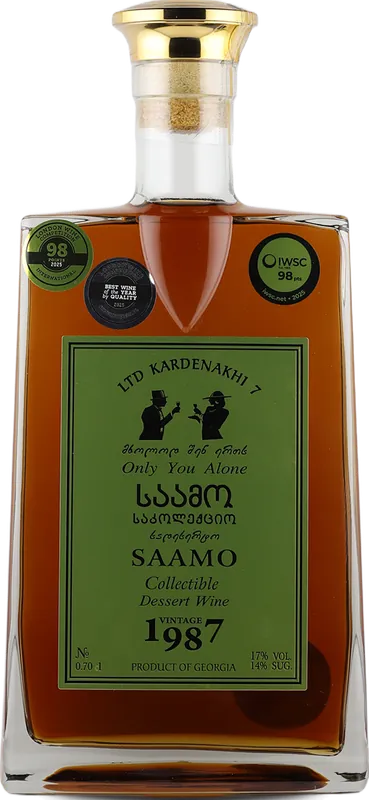
1 wine of 1987 in the catalogue. Vintages are producer declarations. A year we hold for one bottling says nothing about the rest of the range.
Sources
Where these series come from.
ERA5-Land and ERA5 reanalyses, Copernicus
Temperatures from ERA5-Land, a grid of about 0.1°; precipitation from ERA5, a coarser grid. A gridded model, not weather stations in the vineyards.
Contains modified Copernicus Climate Change Service information 2026. Processed: daily values, elevation adjustment. Licence CC BY 4.0. How the weather is computed
Elevation adjustment: Copernicus DEM GLO-90, produced using Copernicus WorldDEM-90 © DLR e.V. 2010-2014 and © Airbus Defence and Space GmbH 2014-2018 provided under COPERNICUS by the European Union and ESA; all rights reserved.
One grid cell per region
Each region is computed at a single representative point, not as an average of its appellations. The card shows the cell's coordinates and elevation, which can differ from the vineyards'.
Season window
April 1 to October 31. A year is compared with the mean of the previous ten full seasons, provided there are at least eight of them.
About these numbers
Source: ERA5-Land reanalysis, precipitation from ERA5 (Copernicus Climate Change Service) — a gridded model, not weather stations in the vineyards. Years are compared with the mean of the previous ten, not with the 1991–2020 climate normal: the climate has shifted, and against that normal 14 of the last 20 years would read as warmer than usual — true about warming, but not about the year. This is not a rating of wine and not a drinking window: the weather explains what the season was like; what ended up in the bottle depends on picking and on the winery's work.